Social Media Character Limits in 2026: A Creator’s Guide to Getting Seen and Heard
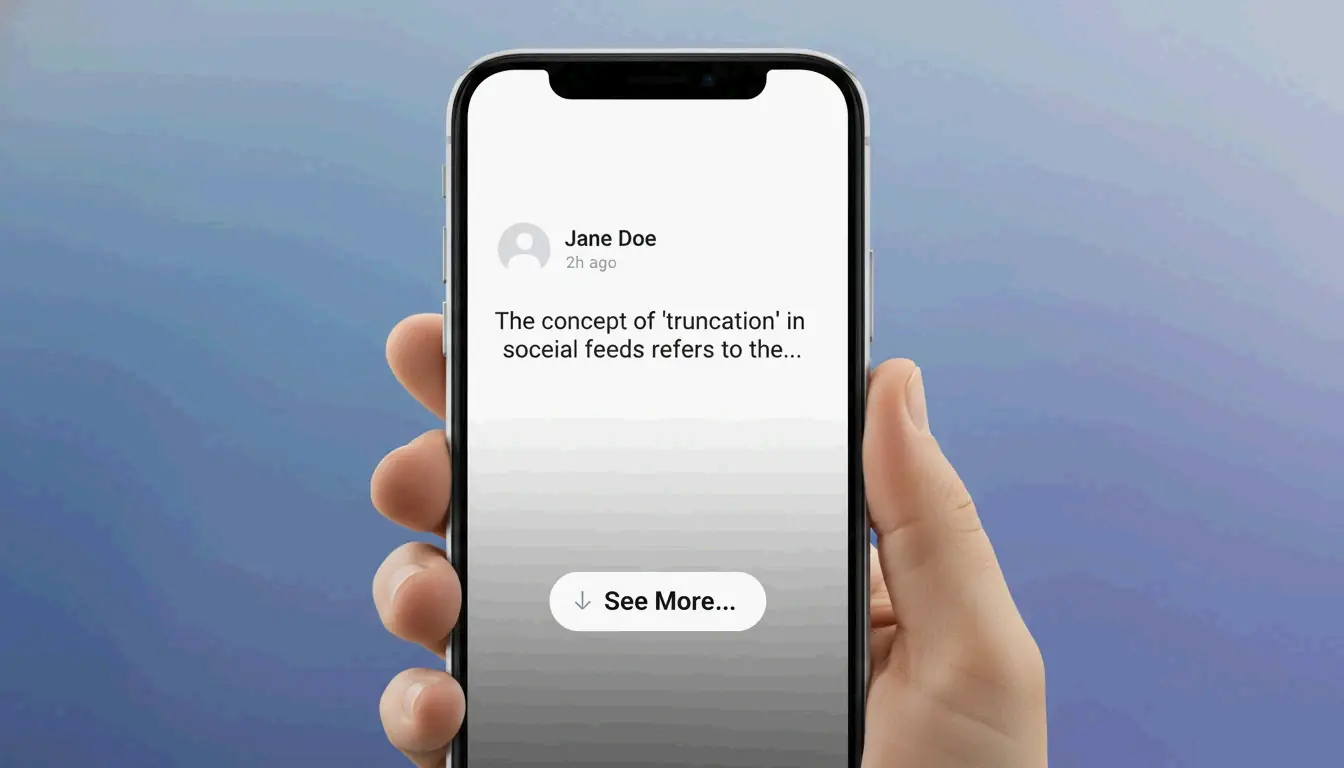
You spend twenty minutes crafting the perfect post. You hit publish, pull up your phone to check how it looks, and your best line — the one that was supposed to make people click — is hidden behind a “See More” button. Sound familiar?
As of 2026, social media character limits range from 280 on X (Twitter) to 63,206 on Facebook. But here is what really matters: Instagram captions truncate at just 125 characters, and LinkedIn cuts you off at 210. If your hook is buried past that point, most people will never see it. Think of it like packing for a trip — you can bring a massive suitcase, but if the most important items are stuffed at the bottom, you will never reach them when you need them.
The 2026 Cheat Sheet: Where Your Posts Actually Get Cut Off
The number that should keep you up at night is not the “maximum limit.” It is the truncation point — the exact spot where a platform hides your text behind a “See More” link. Research shows that most mobile users decide whether to keep reading in under two seconds. If your call-to-action or best insight is past that cutoff, it is essentially invisible.
Here is the full picture for every major platform in 2026:
| Platform | Max Character Limit | What People Actually See (Truncation Point) |
|---|---|---|
| X (Twitter) | 280 (Free) / 25,000 (Premium) | 280 characters (even Premium posts get cut with “Show More”) |
| 2,200 | ~125 characters | |
| 3,000 | ~140-210 characters | |
| 63,206 | ~477 on desktop, ~125 on mobile | |
| TikTok | 4,000 | ~100 characters |
| Threads | 500 (+10,000 for attachments) | 500 characters (full main post visible) |
| YouTube | 5,000 (description) | ~157 characters in search results |
Notice something? On most platforms, the visible window is shockingly small. That is not a bug — it is by design. Platforms want short, punchy content that keeps people scrolling. Your job is to make those first few characters count.
The Pixel Problem: Why “W” Takes More Space Than “i”
According to PickBlend, platforms often measure display space in pixels rather than raw character counts. A wide letter like “W” physically takes up more room than a skinny “i.” This means your actual visible text can vary depending on what words you choose. Research from TypeCount confirms that if your hook is not settled within those first 125 to 210 characters, readers are far more likely to keep scrolling past your post entirely.
Finding Your Rhythm: Platform-by-Platform Strategies
Knowing the limits is step one. Knowing how to work with them is where the magic happens. Each platform has its own personality, and the best creators adjust their approach like a musician tuning for different venues.
X (Twitter): The Sprint
X is still the land of the quick take. The 280-character limit for standard accounts keeps things fast. Even X Premium users who can write up to 25,000 characters still face truncation — those first 280 characters have to earn the click. As SocialRails notes, long posts get a “Show more” link, so the opening line remains your most valuable real estate.
Data from WordCountChecker shows that X posts between 71 and 100 characters perform about 17% better than longer ones. That is the sweet spot — long enough to say something meaningful, short enough that nothing gets cut off.
Facebook: Short Wins Big
Here is a number that might surprise you: TypeCount reports that Facebook posts under 80 characters get a 66% engagement boost. Sixty-six percent. That is the difference between a post that fizzles and one that sparks a real conversation. Keep it brief, lead with your point, and save the backstory for the comments.
LinkedIn: Where Depth is Rewarded
LinkedIn is the exception to the “shorter is better” rule. Posts between 1,800 and 2,100 characters tend to see the most engagement because the professional audience values detailed insights and lived experience. This is your chance to share a real story — what you learned from a failure, how you solved a problem over months of effort, or the habit that changed your career trajectory. People come to LinkedIn to learn, not just scroll.
TikTok: The 100-Character Window
TikTok bumped caption limits to 4,000 characters to help its search engine categorize videos, but the visible portion in the feed is still only about 100 characters. Your caption needs to do two things: hook the viewer and include searchable keywords. Front-load the hook, then use the rest for SEO juice.
The Threads Strategy: 10,000-Character Attachments
Late 2025 brought a game-changer. Meta’s Threads introduced Long-form Attachments that hold up to 10,000 characters — without cluttering the main feed. According to WordCountChecker, these expandable sections let creators keep their posts clean while still offering deep dives for interested readers. Unlike X Premium, this feature is currently free for everyone, making it one of the best tools for organic growth in 2026.
Think of it like a book cover and its first chapter. The 500-character post is your cover — it needs to be compelling enough to open. The attachment is the chapter — where you deliver real value.
The Emoji and Link Traps: Hidden Character Costs
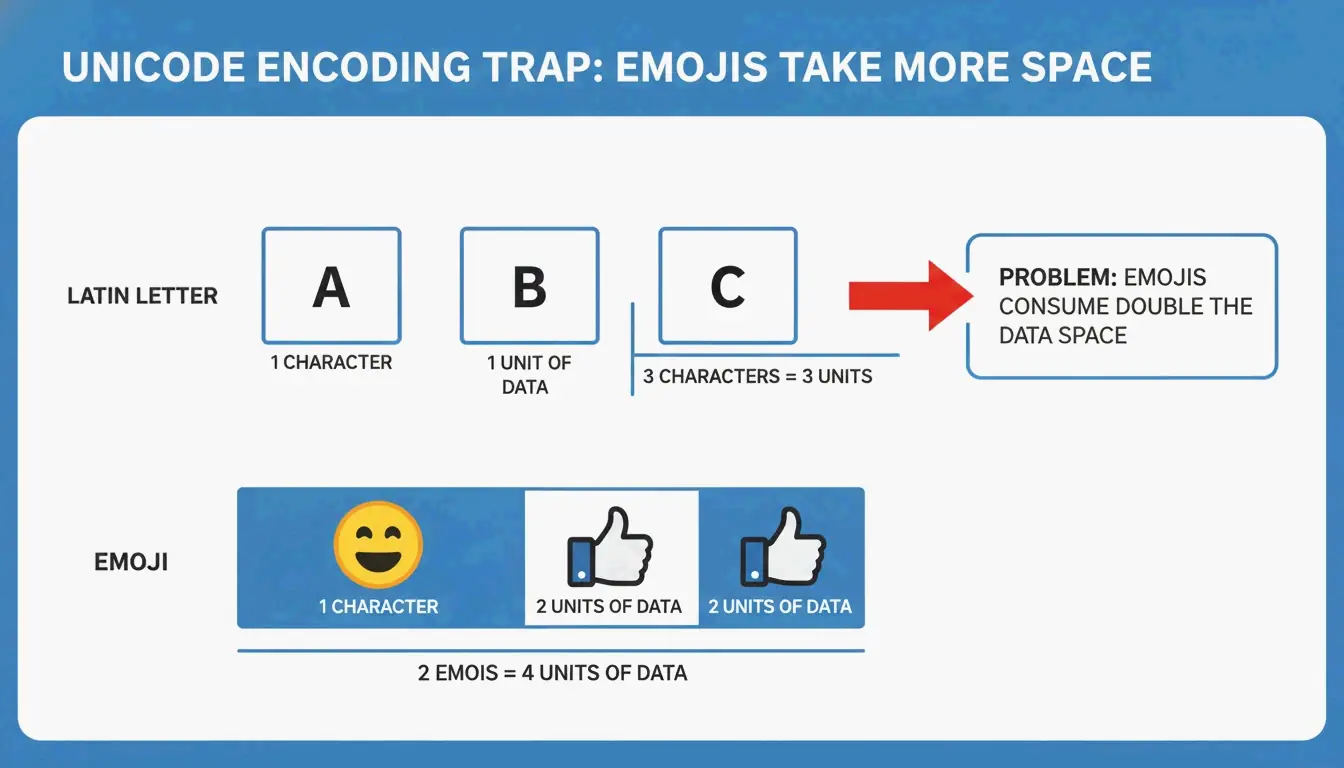
Here is a detail that catches many people off guard. Most platforms use Unicode encoding, and emojis do not always count as one character. According to SocialRails, a single emoji is typically counted as 2 characters because it is a “double-width” character in the code. Add three emojis to your X post, and you have just lost six characters of your precious 280.
The SMS world is even more dramatic. A standard text allows 160 characters using GSM-7 encoding. Add just one emoji, and the whole message switches to UCS-2 encoding, slashing your limit to just 70 characters. That is more than a 50% reduction from a single symbol.
How Links Affect Your Count
On X (Twitter), every link counts as exactly 23 characters, regardless of how long the actual URL is. X automatically shortens links using its t.co service. On other platforms, long URLs eat into your visible text, so using a URL shortener is a smart habit to keep your posts looking clean and prevent truncation.
Building the Habit: A Daily Workflow That Works
The difference between creators who grow and those who stay stuck often comes down to one simple habit: checking their character count before they post. It takes less than ten seconds but saves you from publishing content where the best parts are invisible.
Here is a practical routine you can start today:
- Write your hook first. Before you write anything else, craft the first 100-125 characters. That is your guaranteed visible space on most platforms.
- Use a real-time counter. A character counter that shows you exactly where each platform will cut off your text removes the guesswork entirely.
- Match your length to the platform. Under 80 characters for Facebook, 71-100 for X, 1,800-2,100 for LinkedIn. Treat these like guardrails, not suggestions.
- Test on mobile. Pull up your post on your phone before you hit publish. If the hook is hidden, rearrange.
Consistency compounds. Do this every day for a month, and you will develop an intuitive feel for how long each post should be — no counter needed. That is the kind of small, daily practice that separates hobbyists from professionals.
Conclusion
Maximum character limits are bigger than ever in 2026, but the real battle is won in those first 125-200 characters. Your truncation point is the gatekeeper between your content and your audience. The creators who grow are not the ones who write the most — they are the ones who make every visible character count.
Start with your hook, match your length to each platform’s personality, and build the daily habit of checking before you publish. It is a small investment that pays off with every single post.
FAQ
Do emojis count as one or two characters on social media in 2026?
Most social platforms display emojis as 1 character in the user interface. However, from a technical standpoint, complex emojis (such as those with skin tones or family groups) use Unicode joiners and may count as 2 to 7 characters in backend limits or SEO metadata. For X (Twitter), a standard emoji typically counts as 2 characters.
How does X (Twitter) count URLs toward the character limit?
X automatically shortens every URL using its t.co service and counts it as exactly 23 characters, regardless of the actual URL length. This means even long tracking URLs will not consume your entire character allowance.
What are the character limits for social media bios and profile names?
As of 2026, X bios allow 160 characters, Instagram allows 150, LinkedIn provides a 2,600-character “About” section, and TikTok allows only 80 characters for bios. Keeping bios concise is essential to avoid truncation on mobile profile views.
Why does my Instagram caption look cut off even though I am under the 2,200 limit?
Instagram truncates captions at approximately 125 characters in the feed. Even though the maximum is 2,200, only the first 125 characters are visible before users see a “more” prompt. Your most important message needs to be in that opening window.
Is there a free way to post longer content on Threads?
Yes. Threads allows you to add Long-form Attachments holding up to 10,000 characters for free. These attachments do not clutter the main feed and give interested readers a way to dive deeper into your content.